Making Boarding Assistance Visible: How LIRR Connected Riders, Crews, and Communications Systems
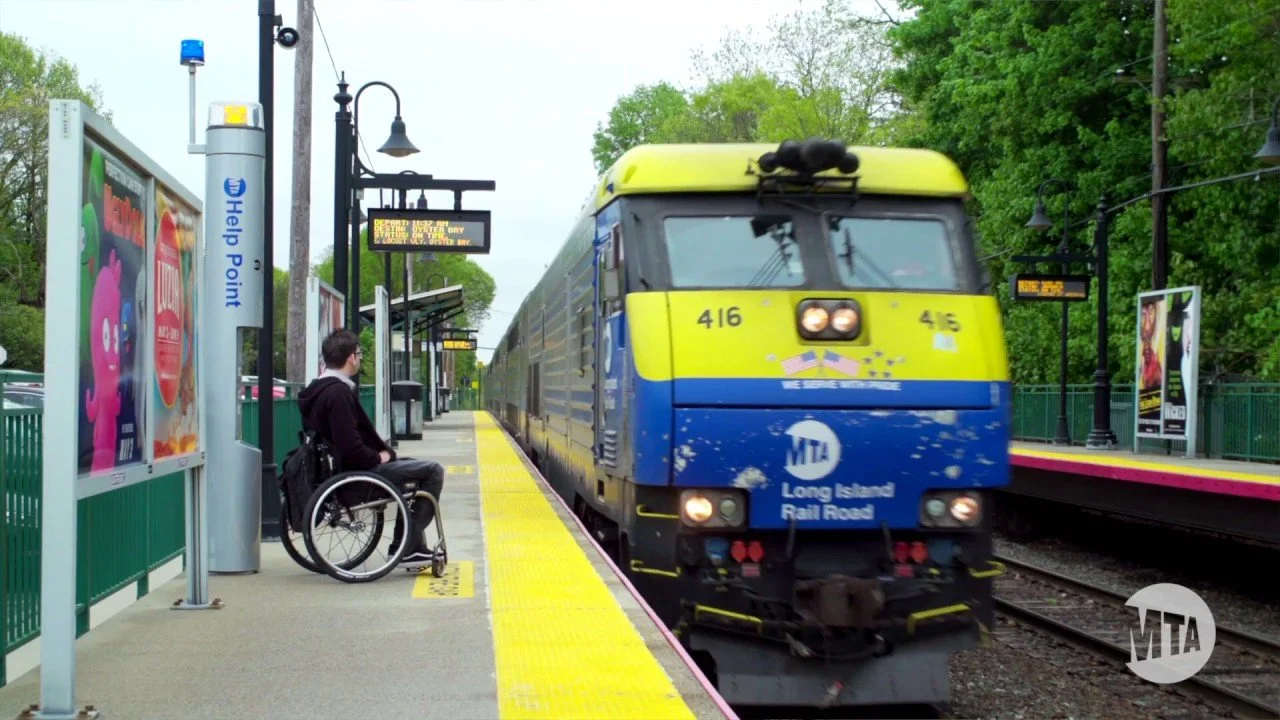
Image Source: MTA
For riders who need assistance boarding a train, a successful trip starts before the doors open. The arriving crew needs to recognize that assistance is needed, and the rider needs a clear way to make that request.
Long Island Rail Road (LIRR) in New York state brought that need to Code Blue®. Supporting riders with disabilities was central to the project: The railroad wanted a visible boarding-assistance signal alongside a direct way for riders to get general information or reach dispatch in an emergency.
The resulting solution brings together the key parts of the Code Blue ecosystem: customized Help Points®, cellular connectivity, and the Code Blue Communications Platform powered by Code Blue Cloud.
Working together, they give riders a clear way to request help at the station. Behind the scenes, diagnostics, reporting, and remote management reduce the routine technical workload for railroad staff.
The Business Challenge
Riders who need boarding assistance, including wheelchair users and people with other mobility limitations, may need help crossing the gap between the platform and the train. A crew member steps off and sets a bridge plate across the gap so the rider can board. That help starts with being seen: If the crew doesn’t know someone is waiting, the rider can miss the train.
The railroad needed to consider how riders would request help and how crews would recognize that request. Voice communication alone did not provide the visual signal the railroad wanted for boarding assistance.
The railroad wanted to achieve three things:
Help arriving crews recognize when a rider needs boarding assistance.
Give riders a clear way to get emergency help or answers to general questions while at the station.
Keep assistance points ready for use across the network while reducing the technical workload for railroad staff.
The Deployment Approach
Code Blue developed the solution around the railroad’s operating requirements, combining the Help Point hardware with cellular connectivity, the Code Blue Communications Platform, and ongoing managed support.
Customize the Help Point around the riders’ needs
Supporting riders with disabilities and addressing ADA accessibility needs helped shape the Help Point’s design, including a dedicated way to request boarding assistance. The Help Point uses four buttons to support three distinct functions in one visible location:
Boarding assistance: The Boarding Assistance button activates an amber strobe, signaling to the arriving crew that someone on the platform needs help boarding. The Cancel Assistance button clears the request once boarding assistance is complete.
Emergency communication: The Push for Help button activates a blue strobe and places a call to the railroad’s dispatch center.
General assistance: The Info button connects riders to a voice-activated virtual receptionist for general inquiries.
Separate controls and signals give each function a clear purpose. The boarding-assistance design later became the basis for Code Blue’s Boarding Assist offering.
To see how the Help Point works, watch MTA’s video: LIRR Accessibility Help Points.
Simplify deployment with cellular connectivity
Instead of running phone lines or network cable to every platform, each Help Point connects over the cellular network. This reduces dependence on the railroad’s own network infrastructure and makes it easier to add units at new locations over time.
Manage devices remotely through the Code Blue Communications Platform
Diagnostics and reporting were especially important to LIRR: The railroad wanted to know the condition of its devices without manual checks, and it didn’t want to run the system on its own network.
The Code Blue Communications Platform, powered by Code Blue Cloud, allows LIRR to address three challenges common to agencies with equipment spread across many locations:
Limited visibility: Without remote access to device status, LIRR staff would need to conduct on-site checks to identify and diagnose equipment issues. The Code Blue Communications Platform runs device-health checks remotely and notifies the railroad when an issue requires local attention.
IT burden: Many agencies, including LIRR, don’t want to host and maintain their own communications software and infrastructure. Code Blue manages the platform, reducing the demands on agency IT staff.
Maintenance cost and efficiency: Remote diagnostics and notifications show maintenance teams where service is needed, which can help them avoid unnecessary site visits.
“We provide remote management of their solution, including firmware updates to the phones,” says Dan Mabrito, Regional Sales Manager at Code Blue.
LIRR’s maintenance teams handle physical servicing on site, while Code Blue handles the technical management remotely.
Give customers visibility into their own devices
The LIRR project also influenced how customers see their own device information in the Code Blue Communications Platform. Before this project, device information was available only to Code Blue. Code Blue had already considered giving customers their own view of the system, but LIRR was one of the first to ask for it. That practical need moved the idea into development.
The resulting browser-based view puts device inventory, operational status, call logs, and reports in one place. Customers gain visibility into their equipment, while Code Blue handles the remote technical management.
The Outcome
The project resulted in more than customized Help Points that support boarding-assistance requests, emergency calls, and general inquiries. LIRR received an integrated solution that brings together purpose-built hardware, cellular connectivity, the cloud-based Code Blue Communications Platform, and managed services for centralized device-health checks and management, with flexibility for future expansion.
The collaboration also prompted additional accessibility development beyond the project’s original requirements. In addition to boarding assistance, Code Blue developed a hearing-loop option for riders who use hearing aids equipped with telecoils (T-coils), which is now part of Code Blue’s product offering.
The Benefits
The solution serves riders, train crews, and the people responsible for the equipment:
Support for riders with disabilities: A dedicated Boarding Assistance button gives riders a clear way to signal their needs to the arriving crew.
Direct access to help and information: Riders know where to go for emergency help or general questions, all from the same Help Point.
Reduced IT workload: Railroad IT staff can focus on other responsibilities while Code Blue manages the communications platform.
More efficient maintenance: Remote diagnostics and notifications point local teams to where service is needed.
Centralized visibility: Device status, call logs, and reports are available in one place.
Room to grow: Cellular connectivity and the cloud-based platform make it easier to add Help Points at new locations.
Takeaways for Transit Agencies
LIRR’s project shows how a specific accessibility need can shape both the Help Point on the platform and the services behind it. A visible boarding signal helps riders make their need known; managed diagnostics and reporting support the equipment over time.
For transit agencies, planning an assistance point means considering three things:
How riders, including those with disabilities, will use it
How staff will respond
How the system will be managed and maintained
The Code Blue ecosystem of Help Point hardware, cellular connectivity, and the Communications Platform powered by Code Blue Cloud is designed to make transit communications systems easier to deploy, manage, and expand, while reducing the burden on agency staff.
For a broader look at planning or upgrading station communications, explore From Call Box to Connected Line: A Transit Leader’s Guide to Modern Safety Infrastructure. The guide covers connected systems, accessibility, response coordination, and practical considerations for specifications and phased upgrades. If you have a specific question or a problem to solve, Code Blue team is here to help.