By David Cook, Community Safety Advocate
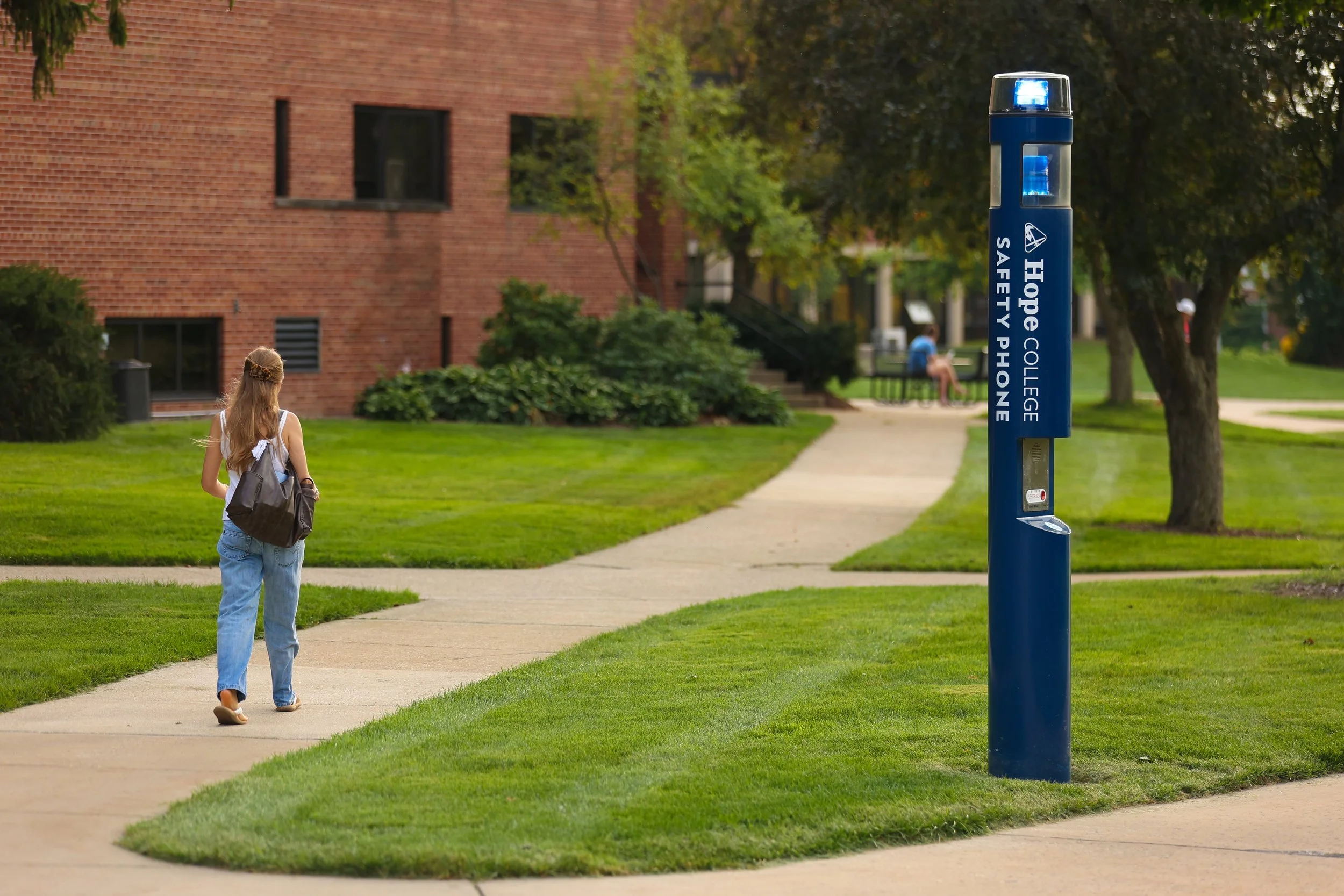
This fall, two universities took down most of their blue light emergency phones.
One of them published its reasons. The phones cost about $70,000 a year to keep running. Over five years they produced 166 calls, and 164 of those were tests or curiosity. Bringing the whole network up to date would have cost around $6 million. The phones that stay are the ones in places where a cell phone does not get a signal. A parent sued. Students wrote columns. Other campuses in the same state said they were keeping theirs.
I have spent my career on these devices, and I want to say something that might surprise you.
I am not going to argue with the math. Seventy thousand dollars a year for a network that produced two real calls in five years is a number I understand. What I will argue with is the question that math was asked to answer, because it was the wrong question.
A phone that only dials a number, bolted to a pole, is equipment from the 1990s doing a job every pocket does now. Judged by that job, it loses. That is what the university's leaders judged, and as far as I can tell, it is the only thing they judged.
The question was never whether to keep that phone. The question is what a space owes the stranger standing in it during the first minutes of something going wrong, and what the campus put in the phone's place to answer it. On the evidence so far, the answer is an app and a hope.
What the light was doing
When tour guides walked families across that campus, they pointed from one blue light to the next. Parents remembered it. Some of them chose the school partly because of it.
The light was making a promise. It said: someone is watching this place, someone cares about what happens here, and if you need help, it is close. That promise does work before anyone touches the button. It changes who feels welcome on a path at night and who decides to try something nefarious there. It tells a person who has never been in trouble that if they are, they will not be alone.
I have heard this from the people who run the places we work with. At Grand Haven State Park, where our devices stand along the beach and the pier, [Arica LAST NAME, TITLE] tells me the lights do their first job before anyone touches them. Visitors can see that the park is watching the water. The people who should not be on that beach can see it too. That is the signal. It works on the person who might need help and on the person who was thinking about causing trouble.
That is a real thing. It is also the part of the story the usage count cannot see.
Why usage is the wrong meter to judge
One hundred sixty-four test calls in five years. I read that number differently than most people did.
I have watched people do this for years. A student on a night walk, a parent on a tour, a security director on the day we finish an install. They press it, they wait, and the question on their face is the same every time. Nobody is in trouble. They are checking whether the promise is real. Every one of those presses is a person asking whether anyone is there.
That is the question a phone cannot answer, because a phone only rings. A system answers it. A system knows where the button press came from, who is on the way, what camera is looking, and whether the device itself was working an hour ago. A system can say, in a way the stranger can see and hear, that help is coming to this spot.
There is a second reason the count misleads, and the park proves it. At Grand Haven State Park, button presses have gone down year over year, and so have incidents. Nobody there reads that as a system failing. They read it as a system working. A device like this is installed with the hope that nobody ever needs it, and a lit post on a dark path is part of why fewer people do. A quiet year is the first job done. On the night someone does press the button, the device has two more jobs: give that person the help and the confidence to act, and tell anyone on that path who should not be there that someone is watching. A phone that only dials does neither of those, and a usage count cannot see either of them.
So here is how we judge the success of what we build, and it is the opposite of how that university judged its phones. We do not count how many times a device is used. We count how many times it does not have to be. A campus that measures its safety layer by presses and phone calls will take it down the year it works best.
What a system answers
At the second campus, in Buffalo, the interim police chief told the student paper something I have thought about since. When a call came in from a blue light phone, dispatch had to find a sheet of paper that said where that phone was. He also said about six in ten of the old units were not working, and that with so many makes and models, parts were hard to find.
I do not read that as an argument against the phones. I read it as a description of a system that was never built around them. A device the dispatcher cannot place, that nobody knows is broken until a student finds out, is a promise with nothing behind it. Taking it down is honest.
Leaving it up is worse.
Here is what the same post looks like when it is part of a system, as it works on properties we support today.
Location. The activation arrives at dispatch with the device name, its place on a map, and the nearest camera already on screen. Nobody reaches for paper.
Health. Every device reports whether it is working, on a schedule, to the people responsible for it. A broken unit is known before a student presses it.
Its own power and its own path. Solar and cellular units keep working when the grid or the building network does not. A device on a wall does not run out of battery, get stolen, or get left in a dorm room.
The first minutes. A connected press can do more than ring. It can tell nearby people who have opted in and have training that something is happening and where. It can speak to the scene. The stranger who pressed the button is not alone, waiting for professionals to arrive.
The University of Michigan is doing something like this now. About twenty-five new kiosks are going in on its Ann Arbor campus this fall, some replacing older units, with more planned over the next four years to fill gaps in coverage. They offer calling, non-emergency help, wayfinding, lighting, and speakers. They looked at the same aging equipment the other two campuses looked at, and they made the investment instead of the subtraction. Their stated reason is that the kiosks give people another way to get help "when a personal device is unavailable, stolen, or out of battery power."
The question I would ask a board
If I were sitting with a board that is about to vote, I would not argue for the phones. I would ask one question: After the poles come down, what does this campus say to a stranger in the first critical minutes?
If the answer is an app, ask how many people have it. One campus paper polled a hundred students, a week after launch. Ninety were not using it. Half had never heard of it. Rolling out an app lets a campus feel it has done something. A safety layer that one in ten people carry is a safety layer for one in ten people, and that is before the harder question: Of those ten, how many will find the phone, unlock it, find the app, and press, with their hands shaking, in the minute it matters? A system that is not adopted protects about as well as no system, and it costs more, because the campus believes it is covered.
If the answer is a cell phone, ask about the dead battery, the dark corner with no signal, and the hands that shake.
If the answer is the people already there, good. Then ask what the space does to help them.
What this looks like for campus leaders
You can retire the phone and keep the promise. You can also keep the phone and break the promise. The difference is the system around the device, and that system is something you can see and measure: Where each press lands, who it reaches, what it tells the people nearby, and whether anyone knew the unit was dead before a student did.
If you lead a campus, a hospital, or any property with paths people walk after dark, there is a simple way to find out where you stand. The Community Safety Readiness Assessment takes about two minutes and shows which of those questions your space can already answer.
Frequently asked questions
-
A phone that only dials a number is close to obsolete on a campus where everyone carries a cell phone. A connected emergency device that reports its location and health, works without the grid, and alerts nearby people is a different thing with the same light on top.
-
The reasons given publicly are low usage, aging equipment, maintenance costs, and the assumption that cell phones and apps cover the need.
-
Some campuses move to an app. Others are upgrading and replacing old units with connected kiosks that add non-emergency calling, wayfinding, lighting, and public address.
-
It works when a personal phone is dead, lost, or has no signal. It sends its exact location to dispatch automatically. It can alert trained people nearby and speak to the scene. And it tells the property when it is not working.

David Cook, CEO
Code Blue Corporation
Safe Community Spaces is a biweekly newsletter from David Cook at Code Blue®. One idea about Community Safety, every two weeks. Subscribe to the newsletter.