
Three Facilities, Three States, One Network: How an Integrator Partner Skipped the Cabling Overhaul
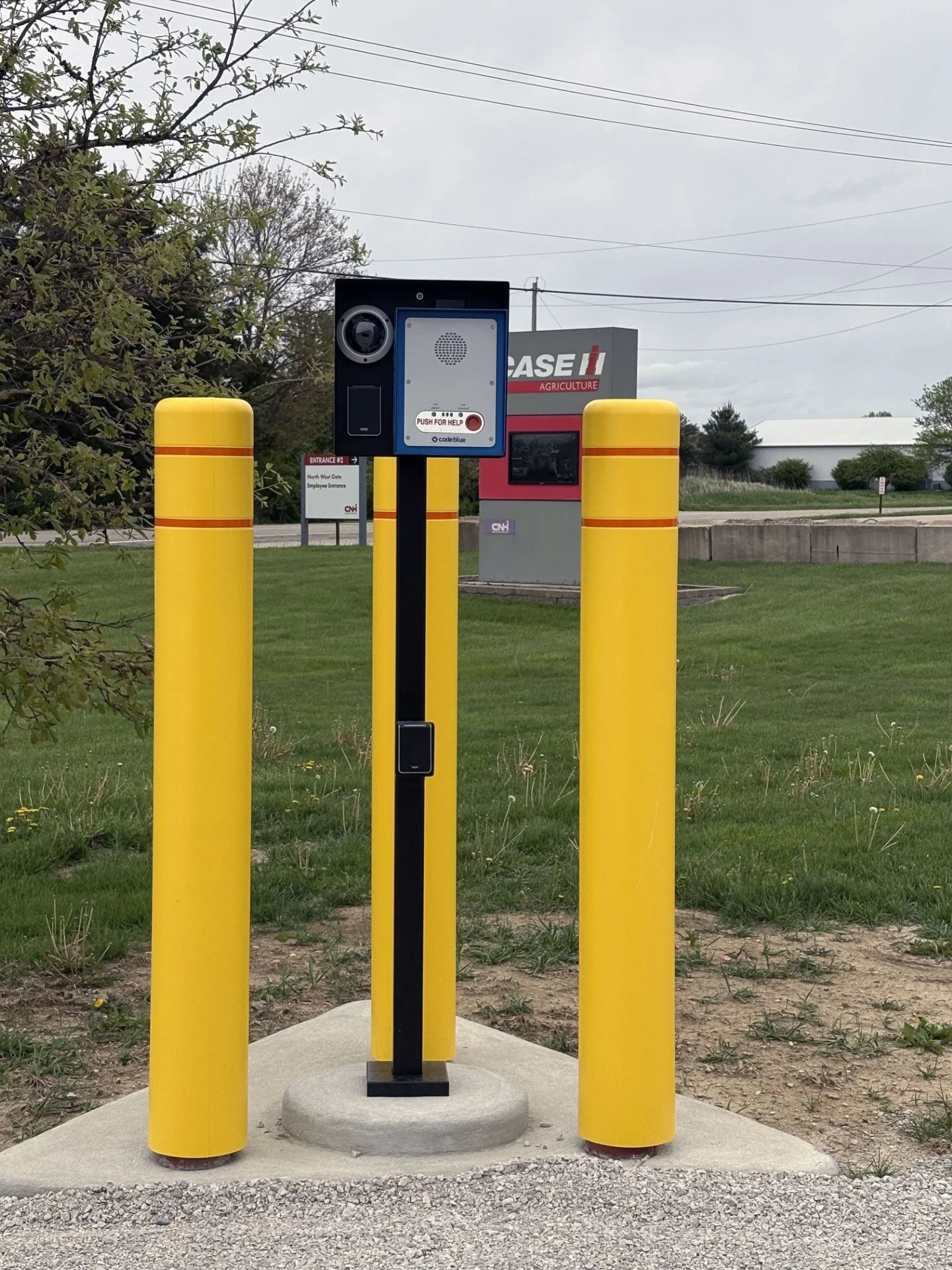
Code Blue LS1000 VoIP Speakerphone at Case New Holland gate station
When Case New Holland needed to replace aging analog emergency communication systems across three facilities in Wisconsin, Pennsylvania, and Illinois, they trusted Schneider Electric as their integration partner. The original scope called for a complete network cabling overhaul to reach every device, including the security gates and turnstiles at the edges of each site. When Schneider Electric called Code Blue, we proposed a different architecture, cellular connections, and Code Blue Cloud, removing the need for new cabling and bringing all three locations onto one platform.
Why was the original plan stalling?
Every integrator has seen the pattern. A customer’s emergency communication equipment has accumulated over years. Some of it is IP and some of it is analog, and all of it was installed when the network looked different. The customer wants one system that works the same way at every site.
On paper, the fix is straightforward. Run new cable to everything and bring it onto a modern network.
In practice, the cable is the problem. The devices that matter most are often the farthest from the nearest network closet. At Case New Holland’s three facilities, the critical points were the security gates and turnstiles. Reaching those points with new conduit and cabling, across three separate properties, was a large part of the scope before a single device was quoted.
Schneider Electric knew Code Blue’s hardware. What the team had not worked with before was Code Blue’s cloud platform and cellular IP design. That’s an increasingly common scenario. The hardware has been on job sites for decades. The connectivity options around it have changed faster than most project scopes have.
What did Code Blue propose instead?
Rather than treating the cabling overhaul as final, Code Blue’s team focused first on what the customer needed the system to do, then proposed a cellular and cloud-based architecture leveraging Code Blue Cloud.
Each device employs a cellular data connection. Every connected device, at every site, reports to Code Blue Cloud, which acts as the centralized communication platform for all three locations. The security team at any facility sees and manages devices across all three states from one central portal.
The effect on the scope was immediate. New physical cabling came off the list entirely. So did the schedule and the disruption that go with trenching and conduit across three working properties. The customer recognized the efficiency and the cost savings of the approach and adopted the wireless design.
The proposal did not add complexity to win the job. It removed the most expensive and least certain part of the job.
How did the design process work?
The final installation combined new and existing equipment on one network.
New LS1000 VoIP speakerphones in Code Blue housings at the gates and turnstiles, with a device on each side of each turnstile so a person can reach security from either direction.
Cellular data plans and Code Blue Cloud accounts for 31 new devices, a mix of Code Blue units and third-party SIP intercoms.
The customer’s existing Code Blue IP phones were kept in service and connected to the same cloud platform alongside the new devices.
The Code Blue devices and the existing IP phones connected to the platform without special handling. The work on this project was in the architecture and the design, where it belongs, and the integration followed from it.
What does the security team have now?
Before the upgrade, three facilities ran on aging analog equipment that was hard to maintain and harder to see. A security team could not easily tell what was working, what had been activated, or what was happening at a gate two states away.
Now every connected device across all three sites reports to one platform. When someone presses a speakerphone at a turnstile, the security team knows which device at which gate at which facility, and can respond from wherever they are. Device status is visible across the whole footprint, so a unit that needs attention gets attention before anyone discovers it the hard way.
The system gives the people responsible for these properties a single view of emergency communication across three states, on equipment that is modern, connected and maintainable, without a cabling project that would have reached into the budget and the calendar for years.
What does this mean for integrators?
Three things from this project travel to the next one.
Ask what the cabling is for before you quote it. If the reason for new cable is to reach devices that could connect over cellular and report to the cloud, the cable may be the most expensive line in the scope and the least necessary.
Bring the manufacturer in at the design stage, not the purchase order. Code Blue’s solution design drawings defined the bill of materials and showed the customer the finished system. That work happens before the quote, and it is what keeps a moving scope from becoming a lost job.
Multi-site customers want one system, not three. Code Blue Cloud puts every connected device on one platform regardless of which state it sits in. For a customer with facilities spread across a region, that is the capability that turns a hardware replacement into an upgrade they can see.
Schneider Electric brought a long customer relationship and the trust that comes with it. Code Blue brought the architecture, the drawings, and the platform. The customer got a connected, reliable emergency communication network across three facilities without digging up any of them.
If you have a multi-site project on your desk, or a scope with a cabling line you would rather not quote,
our team is glad to walk through the options with you.

John Plooster,
Director of Sales,
Code Blue Corporation
Written by: John Plooster who is the Director of Sales at Code Blue Corporation. He joined Code Blue in 2012 after more than 15 years as a sales engineer and manager in telecommunications, and he works with integrator and distribution partners to design and connect emergency communication systems.